RETRAIT D’UVIRA: LEURRE TACTIQUE DU M23 OU VRAI RECUL SOUS PRESSION US ?
En décembre 2025, les rebelles de Mouvement du 23 Mars (AFC/M23), épaulés, encadrés et armés par le Rwanda, ont frappé fort au Sud-Kivu. Le 10 décembre, ils s’emparent d’Uvira, ville stratégique, balayant l’accord de paix fraîchement signé à Washington sous l’égide américaine. Ce coup d’éclat provoque un tollé : les États-Unis montent au créneau, voyant là une trahison flagrante. Sous une pression diplomatique implacable, le M23 cède et annonce un retrait unilatéral, entamé le 17 décembre, promis et théoriquement achevé le lendemain.
Mais est-ce un vrai recul ou une simple feinte ?
Les images d’un retrait – partiel et en cours – s’accumulent, mais restent confinées à la ville d’Uvira elle-même, laissant les environs comme Luvungi, Sange, Makobola ou Mboko sous emprise rebelle. Les responsables du M23 ne mâchent pas leurs mots : le 16 décembre, Corneille Nangaa clame un retrait « à la demande de la médiation américaine », assorti de conditions comme une démilitarisation et le déploiement d’une force neutre. Le lendemain, Bertrand Bisimwa et Willy Ngoma confirment le mouvement, jurant qu’il sera bouclé le 18.
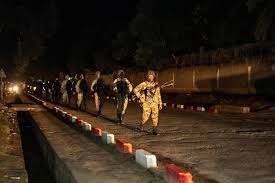
Sur le terrain, les témoignages fusent : des colonnes de centaines de combattants évacuent la ville le soir du 17, filant vers le nord – à pied ou en véhicules, direction Bukavu ou Kavimvira.
La société civile, les journalistes, RFI et Radio Okapi corroborent ces flux. Ce matin du 18 sur X, les posts locaux en rajoutent une couche :le retrait se poursuit, avec une « police » M23 temporaire en place, attendant une force neutre.
Pourtant, le doute plane comme un nuage sombre. Kinshasa, via Patrick Muyaya, Porte-parole du gouvernement congolais, balaie cela d’un revers de main : « non-événement« , « diversion » pour blanchir le Rwanda, une « manœuvre unilatérale » sans retrait total des troupes rwandaises (RDF) de toutes les zones occupées. Où est la vérification indépendante ? Pas d’observateurs ONU ou MONUSCO à l’horizon. Et les RDF ? Les annonces visent l’M23, mais les sources les confondent souvent avec les forces rwandaises, sans preuve distincte de leur départ.
Ce retrait semble réel pour le cœur d’Uvira, mais tactique, limité, et non étayé par des yeux neutres.
Pourquoi ce revirement ?
Diplomatiquement, c’est la poigne américaine qui force la main : la prise d’Uvira défie l’accord de Washington du 4 décembre, déclenchant des menaces de sanctions contre Kigali. Le Rwanda recule pour éviter. Militairement, le M23 consolide ailleurs – hauts plateaux, autres poches du territoire d’Uvira – évitant une escalade régionale qui pourrait aspirer le Burundi.
Politiquement, Kinshasa jubile : ce recul renforce sa posture, exigeant un désengagement total des RDF et exposant les failles et les mensonges du Rwanda. Pour le M23 et Kigali, c’est une survie : image préservée, territoires adjacents tenus. Militairement, les forces rebelles pourraient se redéployer au nord – Masisi, Walikale et l’on souligne des renforts en direction de Lubero – ou verrouiller les environs, avec un risque de flambée si les conditions rebelles (force neutre) ne suivent pas, alors que Kinshasa rejette les conditionnements rebelles.
Soulagement fugace pour les civils d’Uvira, mais l’insécurité régionale ronge toujours.
Diplomatiquement, Washington assoit son emprise sur les Grands Lacs, Kigali ploie sous la menace de sanctions, et la RDC gagne du terrain pour des négociations à venir, à condition que ces accords ne virent pas au mirage tactique.
En somme, ce retrait n’est pas une capitulation, mais une concession astucieuse sous le feu extérieur.
Volatile comme la poudre, la région attend une vérification solide pour que la paix ne reste pas un leurre.
Eugène Diomi Ndongala,
Démocratie Chrétienne
__________________________
M23 Withdrawal from Uvira: Tactical Deception or Genuine Retreat Under US Pressure?
In December 2025, the rebels of the March 23 Movement (AFC/M23), supported, trained, and armed by Rwanda, struck hard in South Kivu. On December 10, they seized Uvira, a strategic city, effectively undermining the freshly signed peace agreement in Washington under American auspices.
This bold move sparked outrage: the United States reacted strongly, viewing it as a blatant betrayal. Under relentless diplomatic pressure, the M23 relented and announced a unilateral withdrawal, beginning on December 17 and theoretically completed the following day.But is this a genuine retreat or merely a feint?Images of the withdrawal—partial and ongoing—have accumulated, but they are confined to the city of Uvira itself, leaving surrounding areas like Luvungi, Sange, Makobola, and Mboko under rebel control. M23 officials have been outspoken: on December 16, Corneille Nangaa proclaimed a withdrawal « at the request of American mediation, » accompanied by conditions such as demilitarization and the deployment of a neutral force. The next day, Bertrand Bisimwa and Willy Ngoma confirmed the movement, swearing it would be finalized on December 18.On the ground, eyewitness accounts abound: columns of hundreds of fighters evacuated the city on the evening of December 17, heading north—on foot or in vehicles—toward Bukavu or Kavimvira.Civil society, journalists, RFI, and Radio Okapi have corroborated these movements.
This morning, December 18, local posts on X add further confirmation: the withdrawal continues, with a temporary M23 « police » force in place awaiting a neutral force; Uvira experienced its first night under civilian control.Yet doubt lingers like a dark cloud. Kinshasa, through government spokesperson Patrick Muyaya, dismisses it outright: a « non-event, » a « diversion » to whitewash Rwanda, a « unilateral maneuver » without a full withdrawal of Rwandan troops (RDF) from all occupied zones. Where is the independent verification? No UN or MONUSCO observers in sight.
And the RDF? Announcements target the M23, but sources often conflate them with Rwandan forces, with no distinct evidence of the latter’s departure.This withdrawal appears real for the heart of Uvira but tactical, limited, and unsupported by neutral observers.Why this reversal?Diplomatically, it is American pressure that forced the hand: the seizure of Uvira challenged the Washington agreement of December 4, triggering threats of sanctions against Kigali. Rwanda backs down to avoid them. Militarily, the M23 consolidates elsewhere—high plateaus and other pockets in Uvira territory—avoiding a regional escalation that could draw in Burundi.Politically, Kinshasa rejoices: this retreat strengthens its position, demanding full RDF disengagement and exposing Rwanda’s flaws and lies.
For the M23 and Kigali, it is survival: image preserved, adjacent territories held. Militarily, rebel forces could redeploy northward—to Masisi, Walikale—with reports of reinforcements toward Lubero—or lock down the surroundings, risking flare-ups if rebel conditions (neutral force) are not met, while Kinshasa rejects any rebel preconditions.Fleeting relief for Uvira’s civilians, but regional insecurity persists.Diplomatically, Washington asserts its influence over the Great Lakes, Kigali bends under sanction threats, and the DRC gains ground for upcoming negotiations—provided these agreements do not turn into tactical mirages.
In sum, this withdrawal is not a capitulation but a shrewd concession under external pressure.Volatile as gunpowder, the region awaits solid verification for peace to cease being an illusion.
Eugène Diomi Ndongala,
Christian Democracy


 Démocratie Chrétienne, D.C.