Aller au contenu principal

Archives de

KAGAME FACE AUX SANCTIONS : ANATOMIE D’UN ECHEC STRATEGIQUE

Voici les vrais leviers qui peuvent faire plier le Rwanda.

Il y a un chiffre qui devrait faire honte à ceux qui ont conçu la stratégie américaine dans les Grands Lacs.

En 2024, le Groupe d’experts des Nations Unies estimait à 3.000 ou 4.000 le nombre de soldats rwandais déployés dans l’est de la RDC. Fin 2025, ils étaient 6.000 à 7.000. Le rapport final S/2026/466, transmis au Secrétaire général le 5 juin dernier et rendu public le 30 juin, en dénombre désormais près de 18 000.

Multiplication par six en dix-huit mois.

Plus de la moitié des 30.000 combattants de l’AFC/M23 sont aujourd’hui des soldats rwandais en uniforme. Il ne s’agit plus d’un soutien à une rébellion : c’est une occupation militaire, à peine déguisée, structurée par une administration parallèle et adossée à un système financier clandestin — Accès Finance S.A. et consorts — installé jusque dans les zones minières de Rubaya.

Ce que ces chiffres racontent, c’est l’échec d’une politique.

Le 27 juin 2025, à Washington, Paul Kagame et Félix Tshisekedi signaient sous l’égide de Donald Trump un accord de paix qui prévoyait le retrait rwandais dans les quatre-vingt-dix jours. Le 2 mars 2026, l’OFAC sanctionnait la Rwanda Defence Force en tant qu’institution et quatre de ses plus hauts commandants. Le 6 mars, le département d’État ajoutait des restrictions de visas. En juin 2026, une raffinerie d’or rwandaise et un réseau lié au M23 étaient à leur tour désignés.

Chaque mesure était présentée comme historique.

Chaque mesure a été absorbée.

Et à chaque mesure, Kigali a répondu par un renforcement de sa présence sur le terrain.

Pourquoi la stratégie des sanctions symboliques a échoué

Le paradoxe n’est qu’apparent. Il découle d’un vice de conception. Les sanctions imposées à ce jour ont été calibrées pour signaler, pas pour contraindre.

La désignation de la FDR (Armée rwandaise) sur la liste SDN — Specially Designated Nationals and Blocked Persons List, le registre officiel du Trésor américain recensant les personnes, entités et gouvernements avec lesquels toute transaction est interdite aux ressortissants et institutions américaines — est un instrument politiquement lourd mais économiquement creux : l’armée rwandaise ne détient pas d’avoirs significatifs sous juridiction américaine, et l’OFAC a immédiatement émis une « wind-down license » (autorisation provisoire) jusqu’au 1er avril 2026 pour permettre aux partenaires internationaux de liquider proprement leurs engagements. Autrement dit, on a annoncé le coup un mois à l’avance en autorisant l’esquive.

Plus grave : Washington a maintenu en parallèle les canaux qui comptent vraiment.

L’aide bilatérale américaine au Rwanda s’est établie à 174 millions de dollars en 2025, contre 200 millions en 2024 — une baisse marginale.

Le portefeuille de la Banque mondiale reste à 3,37 milliards, soit près de quatre fois l’aide par habitant reçue par la RDC voisine.

Trinity Metals continue d’expédier son tungstène rwandais aux États-Unis dans le cadre d’un contrat signé avec le département d’État en mai 2025, présenté comme la pierre angulaire de la stratégie américaine face à la Chine sur les minerais critiques.

Le Rwanda a exporté un record de 2 milliards de dollars d’or en 2025, pillé en RDCongo, dont une part substantielle transite par des circuits que les sanctions n’atteignent pas.

Kagame, en fin analyste, a lu ce message avec une lucidité déconcertante :

« Cela fait mal, absolument, et c’est fait pour ça. Mais je pense qu’il serait encore plus douloureux de ne pas faire ce que nous faisons. »

Traduction stratégique : tant que Washington maintient les canaux économiques essentiels, la sanction est un instrument de négociation, non un instrument de coercition. Elle appelle à monter les enchères, pas à baisser les armes.

C’est exactement ce qu’a fait le régime : augmenter la présence militaire pour maximiser la valeur d’échange future, sécuriser les zones minières avant toute renégociation, et signaler à Kinshasa qu’aucun rapport de force ne pourra se construire sans le Rwanda à la table.

Le rapport S/2026/466 est donc autre chose qu’un catalogue de violations.

C’est le constat clinique d’une politique qui a produit l’inverse de ses objectifs déclarés. À force de vouloir « préserver la porte de sortie », Washington a laissé toutes les portes ouvertes !

Ce qu’il faudrait pour plier le régime de Paul Kagame

Il existe pourtant, dans l’arsenal disponible, trois paliers d’escalade qui, activés simultanément, transformeraient le calcul rwandais. Aucun n’a été utilisé. Chacun frapperait un pilier différent du modèle Kagame.

Le premier palier concerne l’écosystème économique du pouvoir.

La sanction de la FDR ne capture, via la « règle des 50 % », que les entités détenues majoritairement par l’armée. Or l’essentiel de l’économie liée au régime se loge dans des holdings intermédiairesCrystal Ventures Ltd, bras d’investissement du parti au pouvoir, présent dans le BTP, les télécoms, l’agroalimentaire ; Ngali Holdings, dont l’imbrication avec la FDR est documentée mais dont les parts formelles restent stratégiquement sous le seuil critique ; Horizon Group, historiquement lié aux forces armées ; RwandAir, exposée par ses contrats de leasing en dollars ; le Rwanda Mining, Petroleum and Gas Board dont le directeur est déjà sanctionné par l’UE.

Inscrire nominativement ces entités sur la liste SDN (Liste des sanctions OFAC) produirait un séisme immédiat.

Non pas parce que leurs avoirs américains seraient massifs — ils ne le sont pas — mais parce que les banques correspondantes internationales, exposées au dollar, cesseraient de traiter avec elles par peur du risque de conformité. Le mécanisme s’appelle « de-risking » bancaire.

Il a asphyxié progressivement l’Iran entre 2010 et 2015. Appliqué à un pays de 14 millions d’habitants structurellement dépendant du système financier dollar, l’effet serait bien plus rapide : renchérissement de la dette souveraine, allongement des délais de règlement, gel des investissements directs étrangers, fuite préventive des partenaires du Golfe et d’Asie qui commencent à percevoir le Rwanda comme un risque.

Le deuxième palier est le plus destructeur, précisément parce qu’il ne fait pas les gros titres.

Les États-Unis sont le premier actionnaire de la Banque mondiale, du FMI, de la Banque africaine de développement. Ils n’y détiennent pas la majorité, mais ils disposent d’un outil discret et redoutable: le « silent hold». L’administrateur américain peut retarder indéfiniment l’approbation de nouveaux projets, voter contre au titre du Bretton Woods Agreements Act qui l’oblige à s’opposer aux financements de pays soutenant des groupes armés, ou pousser à l’ajout de conditionnalités politiques aux décaissements.

Aucun communiqué de presse. Aucun décret. Juste un pipeline qui se ferme.

Le Rwanda est actuellement sous programme FMI (Policy Coordination Instrument couplé à la Resilience and Sustainability Facility). Il finance à travers les IFI son aéroport de Bugesera, ses infrastructures énergétiques, la modernisation agricole qui compense le manque de terres arables. Fermer ce robinet ne se verrait pas immédiatement dans les comptes 2026, mais assècherait le pipeline d’investissement public pour 2027-2030.

La notation souveraine, actuellement B+/B2, décrocherait. Le rendement de l’obligation souveraine 2029 grimperait mécaniquement. Le modèle rwandais — ce fragile édifice de croissance à 7 % construit sur la dette extérieure, l’attractivité pour les investisseurs et le pillage en RDCongo des minerais 3T — commencerait à se fissurer.

Le troisième palier est celui que Washington redoute le plus, parce qu’il ferme lui-même la porte : la désignation personnelle de Paul Kagame sur la liste des sanctions.

Deux bases juridiques existent. Le régime « conflit RDC » (E.O. 13413/13671) permettrait de le désigner en tant que « leader responsable d’actions menaçant la stabilité de la RDC » — la même base que pour la FDR (Forces Armées Rwandaises).

Le Global Magnitsky Act, plus puissant symboliquement, autoriserait la désignation pour « violations graves et systématiques des droits humains » ; les rapports Mapping de 2010 et les Groupes d’experts successifs fournissent une base factuelle largement suffisante. L’effet direct sur les avoirs personnels du président serait probablement limité — Kagame est réputé pour sa discrétion patrimoniale.

L’effet politique serait sismique.

Un chef d’État inscrit au registre du Trésor ne peut plus être reçu à la Maison-Blanche. L’Union européenne, le Royaume-Uni, le Canada et la Suisse suivraient dans un délai de trois à six mois — c’est la mécanique historique. La candidature de Kagame à la Francophonie deviendrait intenable. Sa participation aux sommets du G20 comme invité, aux conférences internationales, aux médiations africaines s’effondrerait. Les contrats de sécurité bilatéraux avec le Mozambique, le Bénin, la Centrafrique — cette « diplomatie militaire payante » qui a fait du Rwanda un acteur stratégique disproportionné à sa taille — deviendraient politiquement intenables pour les États hôtes.

Surtout, la participation même des soldats rwandais aux missions onusiennes (MINUSCA, MINUSS), qui rapporte plus de 100 millions de dollars par an en remboursements et constitue le socle de la respectabilité internationale du régime, deviendrait juridiquement problématique.

Le prix à payer pour Washington — et pourquoi il faut le payer

Ces trois paliers ont un coût, et il faut le nommer. Cibler les entreprises publiques rwandaises est le palier le plus acceptable : c’est le prolongement logique des sanctions FDR et il ne franchit aucune ligne rouge politique.

Activer les leviers IFI expose Washington à des accusations

Sanctionner Kagame personnellement signifierait renoncer à tout levier futur sur la crise, précipiter le basculement rwandais vers la Chine — déjà amorcé en mai 2026 — et sacrifier probablement les accords miniers Trinity Metals sur lesquels repose la stratégie américaine face au monopole chinois sur le tungstène.

C’est le calcul central qui paralyse la Maison-Blanche : jusqu’où peut-on plier Kagame sans compromettre l’accès aux minerais critiques qui étaient précisément la raison d’être de tout cet exercice diplomatique?

La contradiction est structurelle. Elle est la véritable armure du régime rwandais.

Tant qu’elle n’est pas résolue, Kagame continuera d’augmenter ses effectifs, de consolider son emprise minière, de construire ses banques parallèles, et de répondre à chaque sanction par une démonstration de force calibrée pour rester juste en dessous du seuil de rupture.

Il faudra pourtant, à un moment, choisir.

Les 18.000 soldats du rapport S/2026/466 ne sont pas un accident : ils sont la démonstration mathématique que la stratégie actuelle nourrit ce qu’elle prétend combattre.

Chaque mois qui passe sans escalade est un mois où Kigali accumule des actifs négociables et où Kinshasa perd en crédibilité internationale. Chaque mois qui passe sans escalade est aussi un mois de morts, de déplacés, de viols documentés que la mission onusienne d’établissement des faits a qualifiés de possibles crimes contre l’humanité.

La coercition graduée que pratique Washington repose sur un pari : que Kagame finira par comprendre.

Le rapport du Groupe d’experts prouve exactement l’inverse. Kagame a compris depuis longtemps — il a compris que Washington ne veut pas vraiment aller au bout. Et il agit en conséquence.

Le jour où Washington inscrira Crystal Ventures sur la liste des sociétés sanctionnées OFAC, où l’administrateur américain à la Banque mondiale bloquera silencieusement le prochain projet d’infrastructure, où le nom de Paul Kagame apparaîtra à son tour sur ce registre — ce jour-là, et pas avant, le calcul rwandais basculera.

Jusque-là, chaque discours indigné restera ce qu’il est aujourd’hui : un permis de continuer.

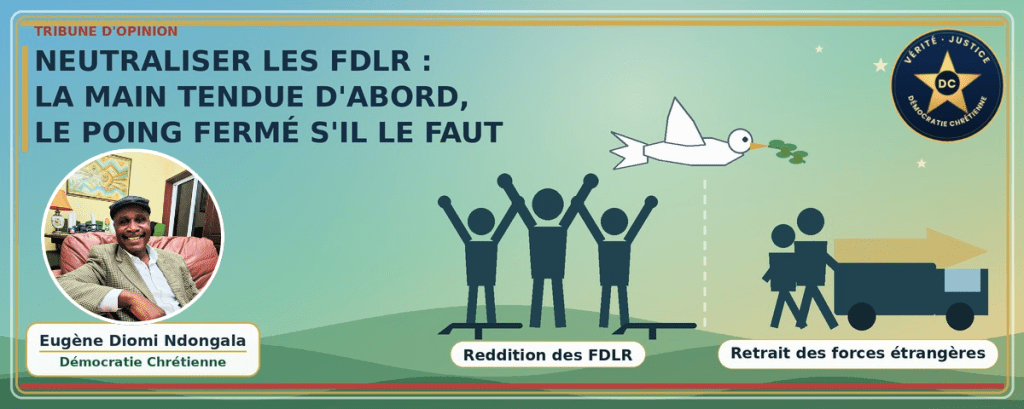
Eugène Diomi Ndongala,

Démocratie Chrétienne, DC

KAGAME FACING SANCTIONS: ANATOMY OF A STRATEGIC FAILURE

Here are the real levers that could force Rwanda to bend.

There is one figure that should shame those who designed the American strategy in the Great Lakes region.

In 2024, the United Nations Group of Experts estimated that between 3,000 and 4,000 Rwandan soldiers were deployed in eastern DRC. By late 2025, that number had risen to 6,000–7,000. According to the final report S/2026/466, submitted to the Secretary-General on June 5 and made public on June 30, the figure has now reached nearly 18,000.

A sixfold increase in eighteen months.

More than half of the 30,000 fighters of the AFC/M23 are now Rwandan soldiers in uniform. This is no longer support for a rebellion — it is a barely disguised military occupation, structured by a parallel administration and backed by a clandestine financial system — including Access Finance S.A. and its affiliates — operating even in the mining zones of Rubaya.

These numbers tell the story of a failed policy.

On June 27, 2025, in Washington, Paul Kagame and Félix Tshisekedi signed a peace agreement under Donald Trump’s auspices that called for a Rwandan withdrawal within ninety days. On March 2, 2026, OFAC sanctioned the Rwanda Defence Force as an institution and four of its highest-ranking commanders. On March 6, the State Department added visa restrictions. In June 2026, a Rwandan gold refinery and a network linked to the M23 were also designated.

Each measure was presented as historic. Each measure was absorbed. And with each measure, Kigali responded by strengthening its presence on the ground.

Why Symbolic Sanctions Have Failed

The paradox is only apparent. It stems from a fundamental flaw in the design. The sanctions imposed so far were calibrated to signal, not to constrain.

The designation of the RDF on the SDN list — the U.S. Treasury’s Specially Designated Nationals and Blocked Persons List — is a politically heavy but economically hollow instrument. The Rwandan army holds no significant assets under U.S. jurisdiction, and OFAC immediately issued a “wind-down license” until April 1, 2026, allowing international partners to cleanly unwind their commitments. In other words, Washington announced the blow a month in advance and explicitly authorized evasion.

More seriously, Washington has kept open the channels that truly matter.

U.S. bilateral aid to Rwanda stood at $174 million in 2025, compared to $200 million in 2024 — a marginal reduction. The World Bank’s portfolio remains at $3.37 billion — nearly four times the per capita aid received by neighboring DRC. Trinity Metals continues to ship Rwandan tungsten to the United States under a contract signed with the State Department in May 2025, presented as a cornerstone of America’s strategy to reduce reliance on China for critical minerals. In 2025, Rwanda exported a record $2 billion worth of gold — much of it looted from the DRC — a significant portion of which transits through channels untouched by sanctions.

Kagame, a sharp analyst, read the message with unsettling clarity:

“It hurts, absolutely, and that’s the point. But I think it would hurt even more not to do what we are doing.”

The strategic translation is clear: as long as Washington keeps the essential economic channels open, sanctions remain a negotiating tool, not an instrument of coercion. They encourage raising the stakes rather than laying down arms.

This is exactly what the regime has done: increasing its military presence to maximize future bargaining value, securing mining zones ahead of any renegotiation, and signaling to Kinshasa that no balance of power can be built without Rwanda at the table.

The report S/2026/466 is therefore more than a catalog of violations.

It is the clinical diagnosis of a policy that has produced the exact opposite of its stated objectives. In trying to “keep the exit door open,” Washington has left every door wide open.

What It Would Take to Break the Kagame Regime

There are, however, three escalation tiers within the existing toolkit that, if activated simultaneously, would fundamentally alter Rwanda’s calculations. None have been used. Each would strike a different pillar of Kagame’s model.

The first tier targets the regime’s economic ecosystem. Sanctioning the RDF only captures, through the “50% rule,” entities majority-owned by the military. Most of the regime-linked economy, however, sits in intermediate holdings — Crystal Ventures Ltd (the ruling party’s investment arm, active in construction, telecoms, and agro-industry), Ngali Holdings, Horizon Group, RwandAir (exposed through dollar-denominated leasing contracts), and the Rwanda Mining, Petroleum and Gas Board.

Placing these entities directly on the SDN list would trigger an immediate shockwave — not because their U.S. assets are massive (they are not), but because international banks exposed to the dollar would stop dealing with them out of compliance fears. This mechanism, known as “de-risking,” gradually asphyxiated Iran between 2010 and 2015. Applied to a country of 14 million people structurally dependent on the dollar-based financial system, the effect would be far faster: higher sovereign borrowing costs, longer settlement times, frozen foreign direct investment, and preemptive flight by Gulf and Asian partners increasingly viewing Rwanda as a risk.

The second tier is the most destructive precisely because it generates no headlines. The United States is the largest shareholder in the World Bank, the IMF, and the African Development Bank. While it does not hold a majority, it possesses a discreet but powerful tool: the “silent hold.” The U.S. executive director can indefinitely delay approval of new projects, vote against them under the Bretton Woods Agreements Act (which requires opposition to financing countries that support armed groups), or push for political conditionalities on disbursements.

No press release. No decree. Just a pipeline that quietly closes.

Rwanda is currently under an IMF program (Policy Coordination Instrument combined with the Resilience and Sustainability Facility). It finances its Bugesera airport, energy infrastructure, and agricultural modernization through these institutions. Shutting off this tap would not be immediately visible in 2026 accounts, but it would dry up the public investment pipeline for 2027–2030. The sovereign rating (currently B+/B2) would drop. Yields on the 2029 sovereign bond would rise mechanically. The Rwandan model — this fragile 7% growth edifice built on external debt, investor appeal, and mineral looting from the DRC — would begin to crack.

The third tier is the one Washington fears most, because it closes the door on itself: the personal designation of Paul Kagame on the SDN list.

Two legal bases exist. The “DRC conflict” regime (E.O. 13413/13671) would allow his designation as a “leader responsible for actions threatening the stability of the DRC” — the same basis used for the RDF. The Global Magnitsky Act, more powerful symbolically, would allow designation for “serious and systematic human rights violations,” with the 2010 Mapping Report and successive Group of Experts reports providing ample factual grounding.

The direct effect on the president’s personal assets would likely be limited — Kagame is known for his financial discretion. The political effect, however, would be seismic.

A head of state listed on the Treasury register can no longer be received at the White House. The European Union, United Kingdom, Canada, and Switzerland would follow within three to six months — this is the historical pattern. Kagame’s candidacy for the Francophonie would become untenable. His participation in G20 summits as a guest, international conferences, and African mediations would collapse. Bilateral security contracts with Mozambique, Benin, and the Central African Republic — the “paid military diplomacy” that has made Rwanda a strategically outsized actor — would become politically unsustainable for host governments.

Most importantly, the participation of Rwandan troops in UN missions (MINUSCA, MINUSMA), which generates over $100 million annually in reimbursements and forms the foundation of the regime’s international respectability, would become legally problematic.

The Price Washington Must Pay — And Why It Must Pay It

These three tiers carry a cost, and it must be named. Targeting regime-linked companies is the most acceptable tier: it is the logical extension of the RDF sanctions and crosses no major political red line.

Activating the IFI levers exposes Washington to accusations of instrumentalizing multilateral institutions — a classic charge from Beijing and Moscow. Personally sanctioning Kagame would mean forgoing future leverage over the crisis, accelerating Rwanda’s pivot toward China (already underway since May 2026), and likely sacrificing the Trinity Metals mining agreements that underpin America’s strategy against China’s tungsten monopoly.

This is the central calculation paralyzing the White House: how far can one bend Kagame without compromising access to the critical minerals that were the very reason for this entire diplomatic exercise?

The contradiction is structural. It is the regime’s true armor.

As long as it remains unresolved, Kagame will continue increasing troop numbers, consolidating his grip on mining areas, building parallel financial networks, and responding to each sanction with a calibrated show of force designed to stay just below the breaking point.

At some point, however, a choice will have to be made.

The 18,000 soldiers cited in report S/2026/466 are not an accident.

They are the mathematical proof that the current strategy is feeding what it claims to fight.

Every month that passes without escalation is a month in which Kigali accumulates negotiable assets while Kinshasa loses international credibility. Every month that passes without escalation is also a month of deaths, displaced persons, and documented rapes that the UN fact-finding mission has described as possible crimes against humanity.

Washington’s policy of graduated coercion rests on one bet: that Kagame will eventually understand. The Group of Experts report proves exactly the opposite. Kagame understood long ago — he understood that Washington does not truly want to go all the way. And he is acting accordingly.

The day Washington places Crystal Ventures on the OFAC sanctions list, the day the U.S. executive director at the World Bank quietly blocks the next infrastructure project, the day Paul Kagame’s name appears on that register — that day, and not before, the Rwandan calculation will shift.

Until then, every indignant speech will remain exactly what it is today: a license to continue.

Eugène Diomi Ndongala,

Démocratie Chrétienne (DC)